Core concepts
A quick mental model of Boost.space. Each term links to its full guide.
Data structure
| Concept | What it is |
|---|---|
| Module | A type of data — the tables of your database. You build the modules your process needs. |
| Space | A container that groups records within a module, with its own roles and access. |
| Record | A single row of data in a module (one contact, one task). |
| Field | A single typed attribute on a record — text, number, date, a relational link, or a computed value. |
| Field group | A named collection of fields. Every field belongs to at least one group; a field can be shared across several. |
| Key field | The field that identifies a record for merging, so imports and syncs update instead of duplicate. |
Working with data
| Concept | What it is |
|---|---|
| Linked records | Relationships between records — link one record or many, and pull values across with lookups. |
| Segmenter & filters | Slice large datasets by conditions, labels, status, and users. |
| Data consolidation | Merging data from multiple sources into one record, using the key field and source priority. |
| Users & teams | Members, roles, and permissions across spaces and the system. |
Connecting & automating
| Concept | What it is |
|---|---|
| Automation | Keeping data current automatically — native actions and triggers, plus scenarios that run on your connected Make.com account. |
| Scenario | A visual automation (a trigger plus steps that move and transform data) running on Make.com, connected to your Boost.space data. |
| Connection | Authenticated access to an external app, used by scenarios to read and write that app's data. |
Building on top
| Concept | What it is |
|---|---|
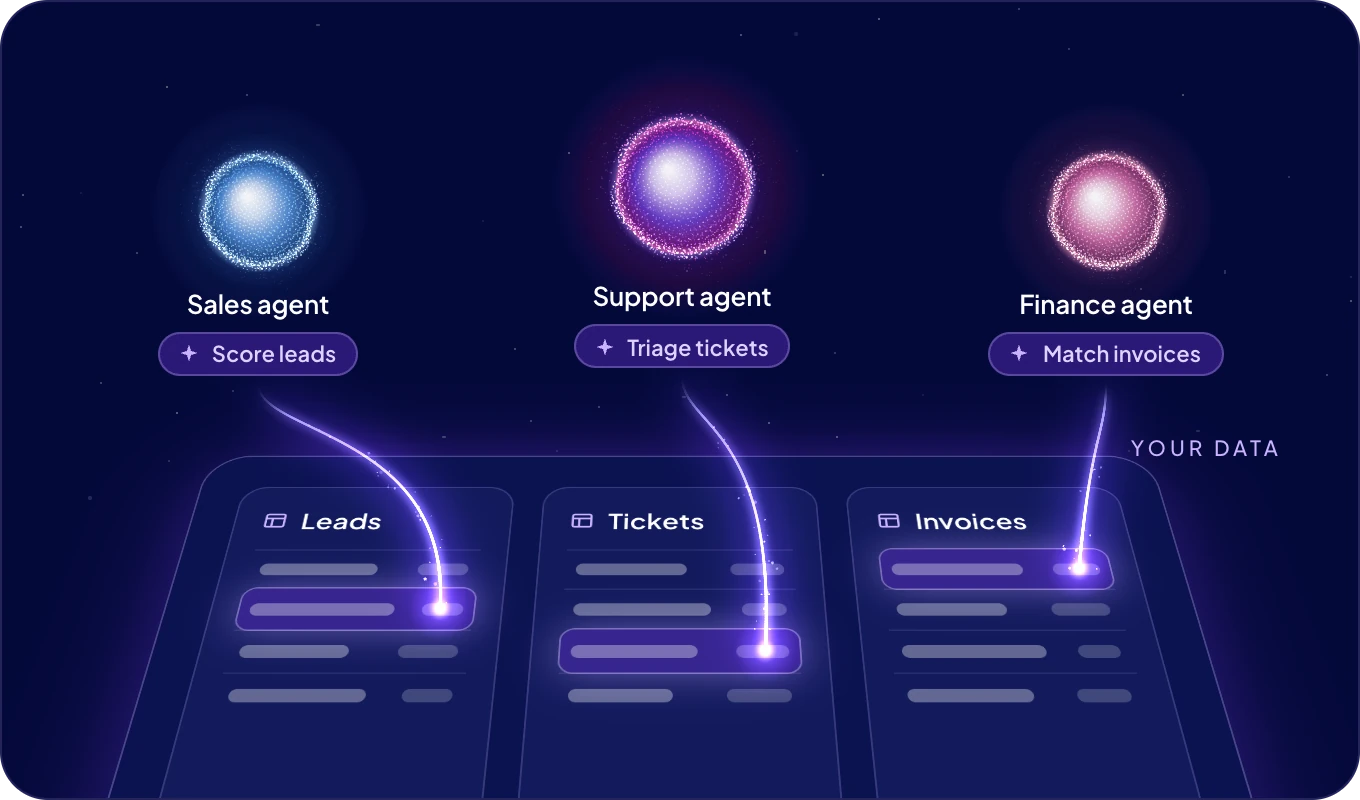
| MCP | Lets AI agents read, write, and query your data in natural language over the Model Context Protocol — within the connecting user's permissions. |
| AI features | AI built into your records: AI fields, text manipulation, and whole-column transformation and validation. |
| REST API | The programmatic surface. One base URL per tenant: https://{system}.boost.space/api. |
| SDKs | Typed clients for TypeScript, Python, PHP, and Go. |
| System | Your Boost.space tenant, identified by its name (e.g. acme → acme.boost.space). |
Want the full vocabulary? See the Glossary. Ready to try it? See the Quickstart.
